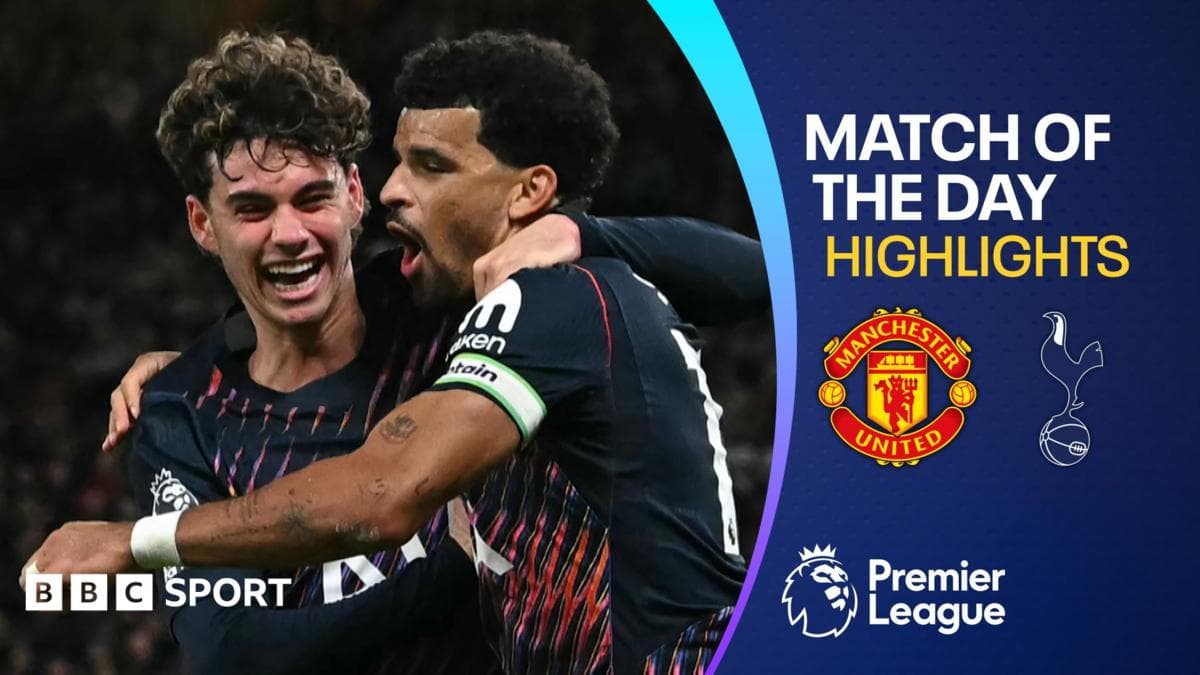
MANCHESTER — The clock ticked into the 95th minute, the raucous atmosphere at Old Trafford threatening to overwhelm the solitary Tottenham Hotspur defender left behind. But in a dramatic finale that encapsulated the unpredictability of the Premier League, a moment of clinical composure from Dominic Solanke turned a losing position into a shared point. The striker’s stoppage-time header salvaged a 1-1 draw for the ten-man visitors, denying Manchester United a victory in a feisty encounter that laid bare the contrasting fortunes of the two clubs.
The match was a microcosm of the modern English top flight: intense, physical, and decided by the smallest margins. For Tottenham, who were reduced to ten men after a controversial dismissal early in the second half, the result was nothing short of miraculous. They entered the fray with a numerical disadvantage that should have signalled a retreat, yet they fought with a resilience that has become a hallmark of their current campaign. Conversely, Manchester United, playing in front of a home crowd desperate for a statement win, were left to rue missed opportunities and a defensive lapse that allowed Spurs to snatch a point from the jaws of defeat.
The turning point arrived when the referee adjudged a challenge in the Tottenham box to be a professional foul. The red card that followed was a watershed moment. It forced Ange Postecoglou’s side to abandon their attacking ambitions and revert to a compact, defensive block. The tactical shift was immediate; Spurs players dropped deep, inviting pressure while looking for the counter-attack. This defensive reorganization highlighted the squad’s tactical flexibility and the depth of their belief. Under immense pressure, the backline held firm, frustrating a Manchester United side that had dominated possession and territory for the majority of the evening.
However, the man who ultimately decided the outcome was Dominic Solanke. The striker has been in scintillating form this season, and his performance at Old Trafford was a masterclass in the art of the predatory finisher. While much of the pre-match discourse focused on the strikers across the city, Solanke has quietly emerged as one of the league’s most reliable goalscorers. His movement was intelligent, drifting into pockets of space that the United defense struggled to track. When the ball fell to him in the crowded penalty area, he didn’t hesitate. His header, powered past a helpless goalkeeper, demonstrated the strength and accuracy that has seen him evolve from a promising youngster at Chelsea into a top-flight stalwart.
For Manchester United, the draw is a frustrating outcome. The home side had created numerous chances, testing the Tottenham goalkeeper with shots from range and crosses into the box. Yet, they lacked the clinical edge required to put the game to bed. The performance highlighted lingering issues within the defense; while the attack showed flashes of the quality expected at a club of this magnitude, the back line remains a work in progress. The feisty nature of the encounter suggested a lack of discipline, with both sides involved in a physical battle that bordered on the reckless. Such lapses in concentration are costly against elite opposition, as Tottenham proved by capitalizing on the final mistake.
Beyond the immediate result, this match carries significant implications for the wider context of the Premier League. For Tottenham, the point maintains their push for a European finish, keeping them in touch with the top six. It serves as a validation of Postecoglou’s philosophy—playing an attacking style even when a player is sent off—and boosts the confidence of a squad that has faced its fair share of criticism. For Manchester United, the result is a reminder that the road to recovery is long and arduous. A draw against a ten-man team is a result that should be expected, not celebrated. The gap between the elite and the aspiring top four remains visible, and until the home side can convert dominance into results, their status as genuine title contenders will remain in question.
The late drama at Old Trafford also underscores the growing importance of set-pieces and late goals in modern football. In a league defined by tight margins, the ability to score in the 90th minute is often the difference between triumph and disaster. Solanke’s goal was not just a stroke of luck; it was the result of meticulous preparation and the ability to execute under the immense pressure of stoppage time. As the season progresses, the psychological edge gained from such dramatic victories cannot be overstated.
In conclusion, the 1-1 draw was a fitting end to a pulsating match that provided all the elements of a classic encounter. It was a testament to the fighting spirit of Tottenham, the clinical finishing of Dominic Solanke, and the defensive frailties that continue to haunt Manchester United. As the dust settles on Old Trafford, one thing is clear: in the Premier League, no lead is safe, and no result is ever guaranteed until the final whistle blows. The point snatched by Spurs will be celebrated as a hard-fought victory, while United will be left to dissect a performance that promised much but ultimately delivered little.